Book Review: Yesteryear
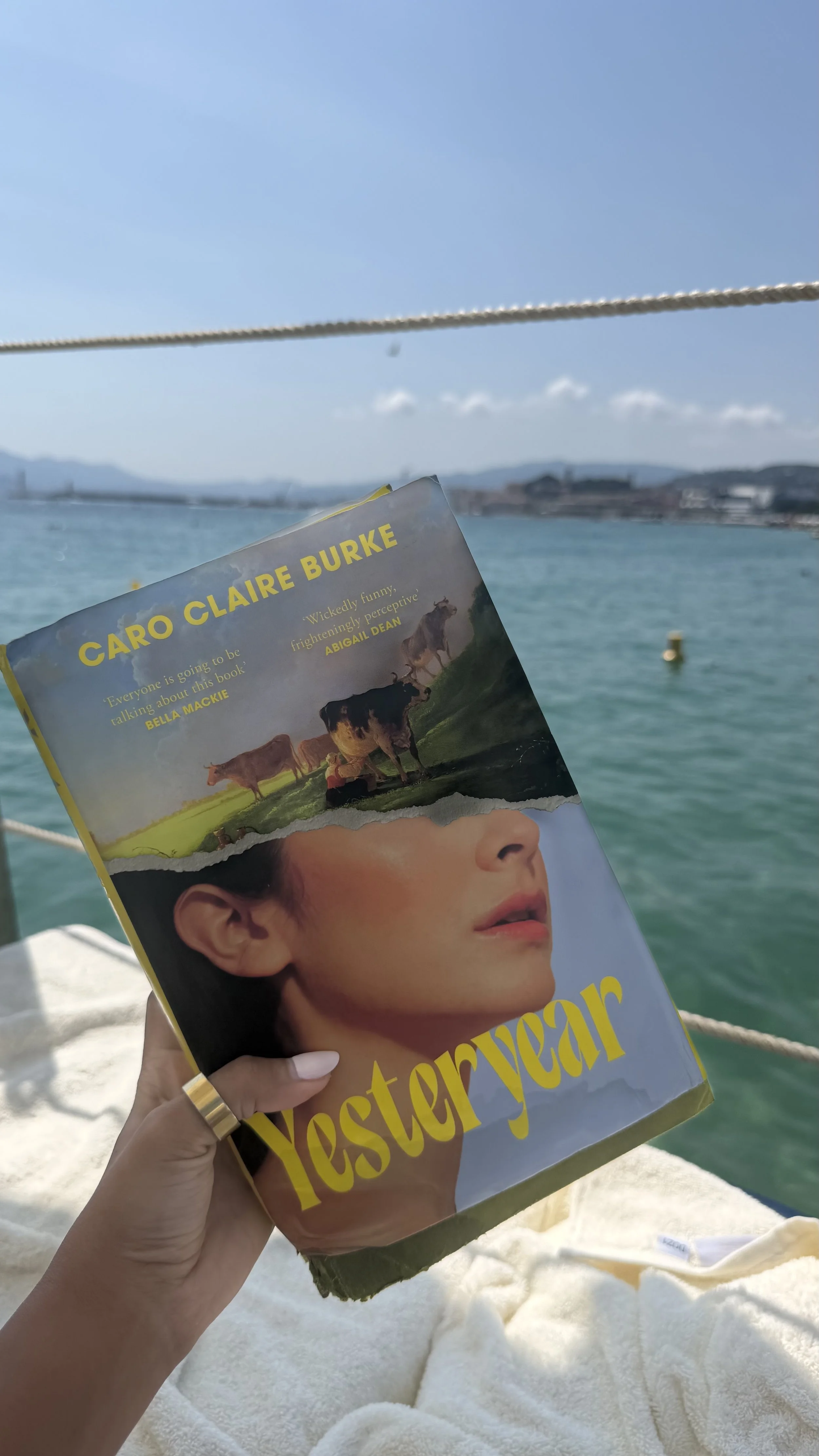
Yesteryear by Caro Claire Burke
Before I started reading Yesteryear I was in the middle of reading The Count of Monte Cristo (which I have yet to finish). The shift between classic literature and modern day writing was so abrupt, but it made reading Yesteryear so much more delightful because the language was so easy in comparison.
The book follows Natalie, a 32 year old social media influencer who runs an account called Yesteryear that documents how she runs her family farm with her husband and children. On the outside it is picturesque, her family, the farm, very Ballerina Farm themed, but the intimacies of her life are anything but that. It shows you how happiness can merely be a still image curated for a post, or directed in video format, when the reality is so dry and lacking of joy it hurts to witness, or to read.
I loved how the book shifted between past and present and constantly left room for the reader to speculate only to draw them back in.
Being inside Natalie Heller Mills's head constantly was my favourite part. The intimacy of it gave you such a layered understanding of who Natalie was and what motivates her.
It made me really challenge the thought I constantly have, a black and white verdict on people, are they good or bad? Because Natalie was really both and neither. In so many ways she was good, she was smart, disciplined, polite, hard working. And in many ways she was selfish, condescending, maybe mean?
She was a victim and a victimiser at once. She was a victim of college girl bullying, a victim of her husband's lack of manliness, and many other unfortunate circumstances. Yet the book always raised the question of her parenting: is she a neglectful parent, does she genuinely care about her kids? That automatically makes a woman bad in the mainstream world, doesn't it? When a mother is questioned on her mothering, that is enough to deem her a bad person.
I disagree with that. I believe she was forced to be work-driven, her work happens to be social media, in order to provide for her family. Her obsession with views and being online, how it started and where it ended, all came from a place of needing to provide for her family, which in itself was a result of her husband not doing so.
Even one of Natalie's main victims in the book could not describe her with hate. She also felt empathy for her. The whole struggle of life is trying to put things into organised boxes, black and white, right or wrong, when in reality everything is in the grey area.
The book also challenged modern views on feminism and what it really meant to be a corporate girlie. Natalie constantly finds herself comparing her life to her college roommate Reena's. While Natalie dropped out, got married and had many kids, Reena chose the corporate life. It shows you the juxtaposition of the two paths often granted to women, and presents it as a choice between those two only, when in reality many women lead lives with shades in between.
The constant comparison to Reena is the FOMO we experience when we choose one way or another. Maybe it was Natalie's way of convincing herself she chose the right path. We only ever see the results of Reena's life choices from Natalie's point of view. What if Reena was the happy one?
That was quite relatable for me as I am now in a stage of life of settling into married life and on a long leave from my job which was corporate in many ways.
I went from being so work-driven, investing all my time and energy meeting goals and targets, and being a stellar employee to sleeping in until my body is refreshed and having no work other than focusing on my studies. The shift was drastic for me both in lifestyle and ideology. I became more of myself and for once my nervous system was calm. I am where I am meant to be. I'm not built for the grind, for the constant work, for nine to nine days, for corporate competition and constant need to strategise, get ahead, defend my position at work. It was exhausting and took a huge toll on my body and mental health. I like being taken care of, I like working not out of necessity, but out of want for more. I like being a stay at home wife. It is not anti-feminist to say that and believe that.
The book made me reflect on these thoughts. For a long time I struggled to come to terms with that revelation. It made me feel like a loser and an anti-feminist, but it no longer does. On the contrary, I believe every woman should choose the path that suits her, and there is no one size fits all. And I also believe it is so fucking hard being a woman, regardless of what you do, stay at home or work or anything in between.
That was my key takeaway from it.
While it is centred around social media, and trolls are a central theme in the book, I did not really resonate with that, but maybe you will.
Throughout this review I find myself contradicting my thoughts, and that's exactly how the book felt. A series of contradictions.
And while the book does have some serious thought provoking themes, it's only that if you were looking for it. In general it's a nice quick beach read. You get to pick how you want to experience it.